
How to Search Criminal Dockets
Indiana MyCase is the main online route to a public Dubois County criminal docket. It searches nonconfidential Odyssey cases by case number, party name, or attorney. A name search can be narrowed with court, case status, case type, and filing-date filters. An exact case number works best, since similar names often flood the results.
Work the chain in order. Search MyCase first. Then call or visit the Dubois County Clerk of the Courts for a CCS or a filed document. A clear mailed request should name the court, case number, document, and copy type. For a hearing setting, ask the assigned court. For a transcript, contact its reporter.
- Open MyCase and choose Case, Name, or Attorney search.
- Enter the known identifier and narrow the court to Dubois County.
- Check for 19C01 or 19D01.
- Open the case and read the newest CCS entries.
- Request a certified copy from the clerk when needed.
Dubois Criminal Court Codes
The official Odyssey courts list shows 19C01 as Dubois Circuit Court and 19D01 as Dubois Superior Court. Those prefixes tell you which court owns the case. They also show which office can explain its calendar. Both Dubois courts joined Odyssey in 2019. Older material may still sit with the clerk. An unposted paper may still sit with the courthouse Records Library. Never rebuild a number from memory; copy it from a notice, order, or CCS. The official Odyssey source lays out the statewide court coverage.
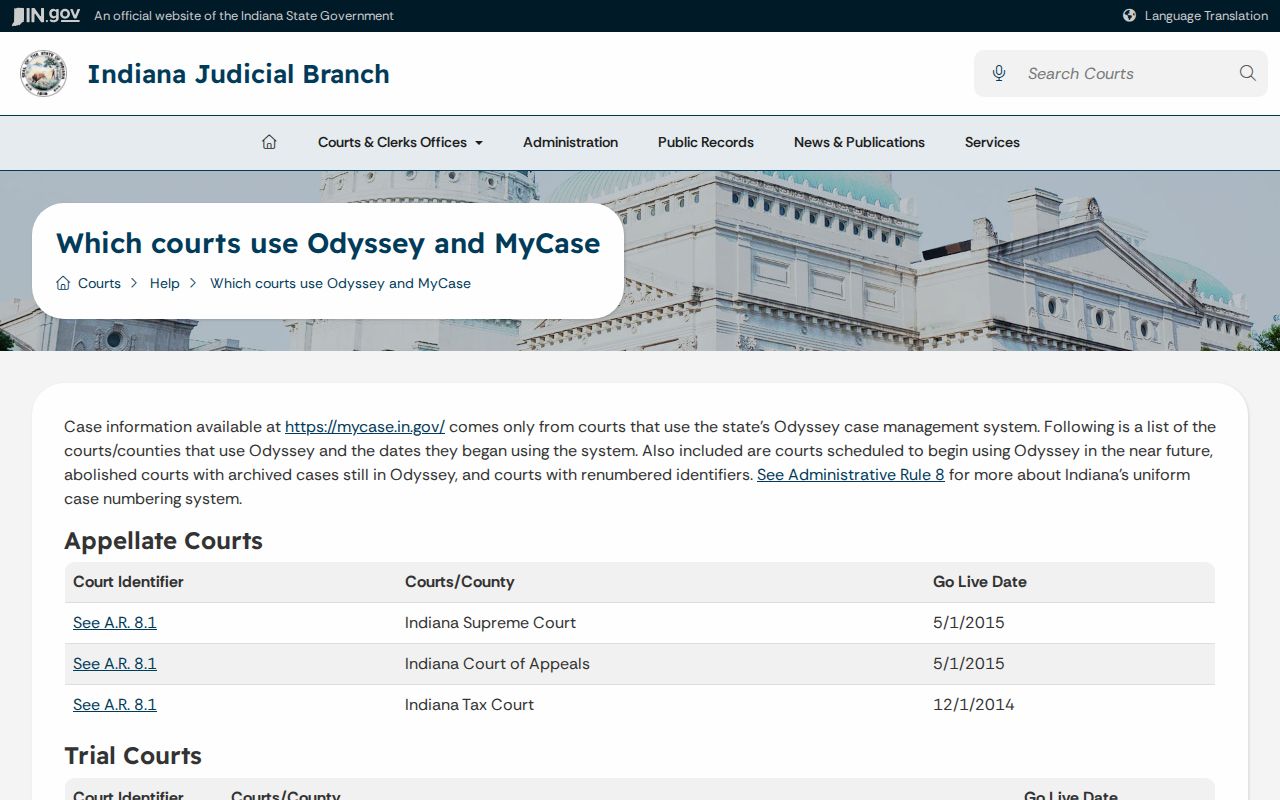
Both codes belong in any complete Dubois County criminal docket search.
What a Criminal Docket Shows
Indiana names the official event list a Chronological Case Summary, or CCS. It tracks judicial events in time order. One row may state that a charge, motion, order, hearing, plea, or disposition was entered. But the CCS omits many facts. It never carries the full text of a filing.
| Court and case | Code, number, type, caption, filing date, and status. |
|---|---|
| Entry timing | Event date and entry date, which may differ. |
| Activity | Charge, motion, hearing, plea, ruling, disposition, or sentence. |
| Setting | Date and event label for a scheduled proceeding. |
| Document | A link when a public order or filing is online. |
A search result is never a certified copy. The CCS may show that an event was recorded, yet only the filed document supplies its actual terms.
Dubois Charge Assignment Rules
Dubois Local Rule LR19-AR1-2 assigns filings by the most serious charge. Circuit categories cover homicide, burglary, battery, kidnapping, sex crimes, robbery, weapons and violence, domestic violence, forgery, and Red Flag matters. Superior categories cover theft, arson, stalking, controlled substances, alcohol, traffic, conservation, gambling, and public-order offenses.
| Clue | Likely code | Search step |
|---|---|---|
| Circuit category | 19C01 | Filter for Circuit Court. |
| Superior category | 19D01 | Filter for Superior Court. |
| Several charges | Varies | Confirm the actual CCS. |
A category predicts routing only, never guilt or outcome. Transfer and companion-case rules can still shift where a docket lands.
Stages on a Criminal Docket
A Dubois County criminal docket builds in a sequence, though not every case reaches each step. The local process is filing or charging › initial hearing › discovery and pretrial › plea or trial › disposition › sentencing or final order. Each stage may produce several CCS rows.
Discovery is simply the exchange of case information. Local rules set criminal discovery and motion timing. They key those deadlines to the initial hearing, final pretrial, and trial. A docket entry may note compliance, a motion, or a setting without showing the material behind it. Remember that a plea is not sentencing. A trial setting is not proof that a trial ever happened.
Note: Read later entries before treating an old setting as current. A reset, plea, dismissal, or order may follow it.
Dubois Criminal Deadline Context
Local Rule LR19-CR00-3 explains the county schedule. The state must produce discovery within 40 days after the initial hearing. The defense has 60 days. All discovery should finish 21 days before trial. Substantive motions are due no later than 10 days after final pretrial. Plea talks should wrap up at least 10 days before trial.
That timeline explains why pretrial entries cluster on a docket. It cannot tell you a party's actual deadline without the order and the case facts. Late continuances generally demand unforeseeable, extenuating circumstances. In every case the judge's order controls.
Setting is not disposition. A hearing date shows planned activity. A disposition records how a charge or case ended.
Which Court Holds Criminal Dockets
Dubois County runs one Circuit Court and one Superior Court. The same elected Dubois County Clerk of the Courts maintains both trial records. Local assignment rules drive the split, not separate city courts.
If a case seems missing, search both court codes. The most serious charge controls initial assignment. A party may seek transfer for good cause, and companion cases can be consolidated with both judges' consent. A dismissed and refiled matter stays with the same court under the rule. An online result may leave the assignment unclear. The county phone directory lists the clerk and both courts.
Criminal CCS Versus Case File
Think of the CCS as an index and event history. The full case file may hold a charging instrument, motion, order, plea agreement, judgment, or exhibit. Some public documents show up as MyCase links. Others need a clerk request. For an official transcript, the reporter is the route.
| Record | Source | Purpose |
|---|---|---|
| CCS | MyCase or clerk | Events and dates. |
| Filed paper | MyCase or clerk | Text of a public filing or order. |
| Transcript | Court reporter | Words spoken in a recorded proceeding. |
Inspect the public document itself rather than inferring its text from a short description.
Public Access and Sealed Dockets
The Indiana Rules on Access to Court Records presume access and then carve out protected records. Rule 5 lists confidential categories and identifiers. Rules 9 and 10 govern access procedure and excluded records. MyCase cannot override a seal.
Key rules: Access remains subject to sealed, expunged, juvenile, protection-order, protected-identity, and document-level limits. The Indiana Access to Public Records Act also applies, but court records follow judiciary rules and the clerk route.
A missing result can stem from restriction, spelling, old records, transfer, or indexing delay. Parties may use MyCase party access when eligible. Never try to bypass a seal or dig out redacted identifiers.
If a Dubois Setting Differs
Set the newest CCS entry beside the notice or order first. Then open Indiana CourtCal and compare. Do the two disagree? Call the assigned court. The current order controls over any stale search result.
When you reach staff, give them the exact case number, court code, date, and event label. Say which form you need: a plain CCS printout, a certified order, or the filed paper itself. Want the words spoken at a hearing? That is a reporter's job, not a calendar question or a records request.
Dubois Criminal Copy Requests
Going online is only one route to a Dubois County criminal docket copy. The state judiciary's court-record request guidance sends trial-court requests to the county clerk. You can walk up to the counter. You can call ahead to confirm the record and the charge, or mail a precise written request. Some older criminal filings sit in the courthouse Records Library. For an official hearing transcript, ask the court reporter instead of the clerk.
A strong request names the Dubois court code, the exact case number, and the filing or event date. It also names the document title. State whether you want a plain or certified copy. Confirm the record is public and available electronically before you send any money. The county publishes its copy charges. The final total still hinges on record type and page count. Staff will locate court records and walk you through the steps. They will not interpret a docket for you.
Know what you are asking for. A CCS request gets the chronological event list. An order request gets the judge's own text, and a transcript request gets what was said in court. One more caution: a missing MyCase link does not, by itself, mean a paper is sealed or missing from the clerk's file.
Dubois Criminal Source Boundaries
Three local sources help separate a criminal CCS from records that merely share a name, a place, or a citation. The official Jasper city government page offers municipal context. Note that Jasper has no separate Odyssey criminal court code of its own.

A criminal case filed in county court stays under 19C01 or 19D01 no matter which city the event ties to. The county's Small Claims office page reflects a different Superior Court division altogether.
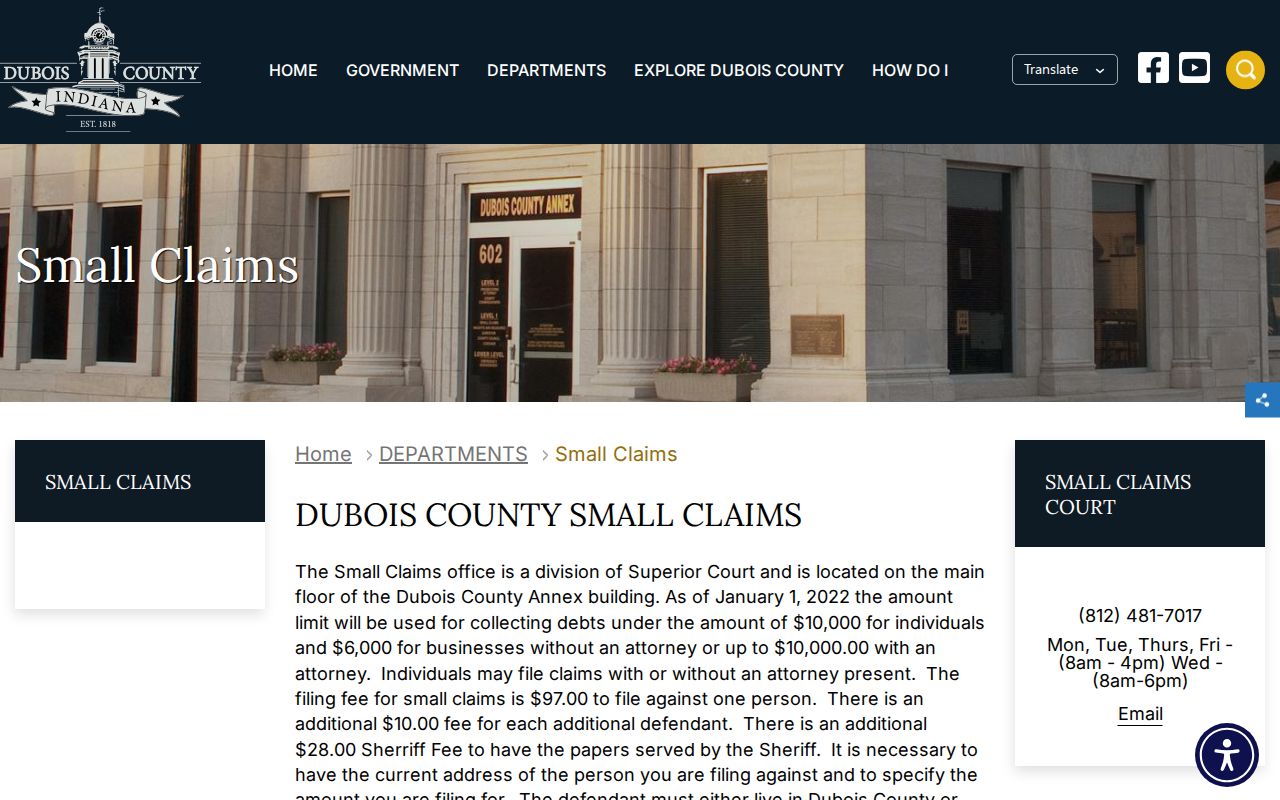
Small Claims is civil work, and it should not be mistaken for a criminal docket just because both can carry the 19D01 court code. The Indiana State Police traffic-ticket guidance points to the court, not the police agency, as the source for payment and case status.
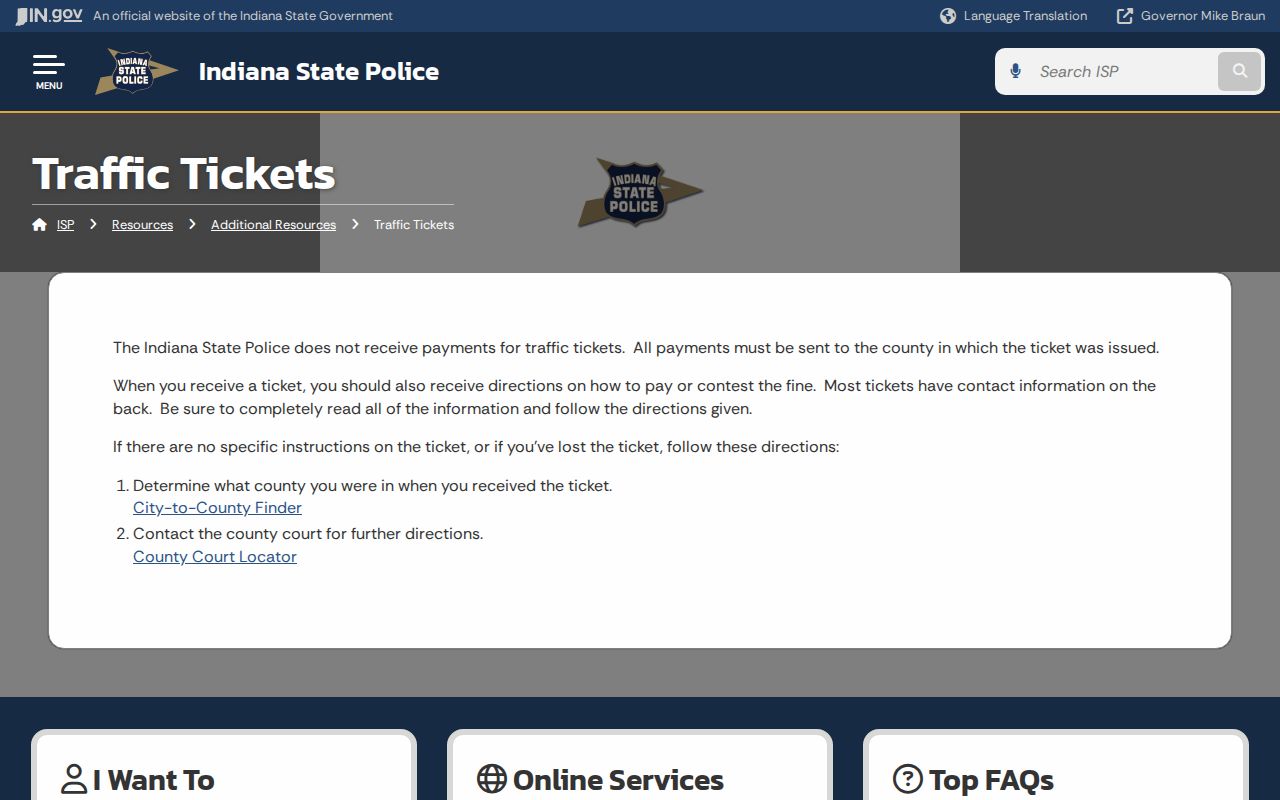
Any citation-related criminal or traffic case still has to be confirmed in the county CCS. Police do not keep the court's official event history, take the court payment, certify an order, or move a hearing date. Only the court docket can settle those questions.